

Here’s How Competitive Intelligence Can Help You Build A Resilient Supply Chain
Reuters reports that supply chain disruptions result in average $82 million in yearly losses per company. Common supply chain problems like supplier price hikes, shipment delays, and environmental disruptions (all bad news for business operations, profits, and reputation) collectively highlight the need for supply chain resilience. This simply means you have a plan for alternative strategies and sources across your supply chain to use whenever disruptions hit. Fortunately, competitive intelligence can help. Competitive intelligence can collect and analyse information about competitors’ supply chains so you can compare their strategies to your own and make strategic improvements. You’ll, therefore, minimise supply chain risk and help your business maintain a competitive edge.
Diversify suppliers to minimise financial risk
Competitive intelligence can tell you what suppliers your competitors use so you can diversify your suppliers as needed to reduce financial risk. In fact, supplier diversity has been found to generate an ROI as high as 133%.
Supplier.io’s advanced data management platform helps businesses improve supplier visibility and data accuracy across their networks, ensuring that reliable, centralized insights back diversification efforts for smarter sourcing decisions. If your competitors tend to be reliant on the same supplier, this typically means the supplier has all the bargaining power. They can charge higher prices and still maintain their customer base. Plus, relying on a single supplier also leaves you vulnerable to price hikes and loss of supplies if there are delays or they go out of business, for example. This is another point in favour of diversification.
So, if you use that same supplier as your competitors, that means you’re probably also charged higher prices. There may be cheaper suppliers out there. So, do some research and go with a cheaper (yet still reliable) option. Plus, competitive intelligence (via publicly available financial statements) may also reveal how much competitors pay suppliers. This may further help you negotiate better deals with your chosen suppliers so you don’t overpay.
Establish contingency shipping routes
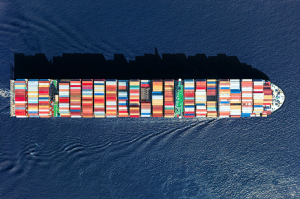
The 2021 Suez Canal obstruction that was famously caused by the Ever Given ship — one of the world’s biggest container ships — was estimated to have a staggering $416 million per hour impact. It, therefore, remains a cautionary tale about operational shipping risks in supply chain management. Operational risks are risks that stem from internal processes within the supply chain. For example, these may be inefficient systems, labour shortages, or human error. But back to the Ever Given: as the ship started to cross the canal (which usually takes about sixteen hours), it was hit by a sudden dust storm and wedged itself across the width of the waterway. Egyptian officials say this disaster was primarily due to human error, more so than the dust storm. The blockade lasted six days and delayed 400 ships.
So, how could competitive intelligence have helped businesses avoid completely (or recover quickly) from this delay? For one, competitive intelligence can analyse competitors’ shipping routes, including alternative emergency routes. Some ships chose to use the Cape of Good Hope rather than wait for the Suez blockage to clear. But this added extra fuel expenses and at least ten days onto the journey. However, these downsides may have been a better alternative to waiting for the blockade to clear for ships with high-value cargo. Plus, competitive intelligence can also reveal routes competitors typically use. You may, therefore, notice some have greater potential for congestion and map alternatives as needed.
Mimic competitors’ logistics backup plans
Extreme weather events (which also played some role in the Suez crisis) are predicted to cost businesses around $3-5 million annually by 2030 due to supply chain disruptions. That means you must weather-poor your supply chain to maintain operations despite storms, floods, and heatwaves. Competitive intelligence (via news articles and company press releases, for instance) can provide insight into how competitors responded to past weather disruptions. So, maybe you discover a competitor has a solid logistics backup plan. This could involve storage of extra inventory (particularly high-risk parts) at other sites, so it’s always accessible regardless of weather (a smart strategy to mimic). You may also learn that your competitor has alternative distribution methods for that same reason. Use planes and trains in addition to boats to keep your supply chain functioning smoothly as usual.
Competitive Intelligence To Help You Build A Resilient Supply Chain
Competitive intelligence is an integral way to manage supply chain risk. So, study your competitors’ supply chain strategies and tweak your own as needed. You’ll, in turn, build a resilient supply chain that keeps you ahead of the competition.
We are Octopus. The Global People-Powered Competitive Intelligence Agency.
Outsmart your competition. Make the unknown known. Octopus helps you gain clarity in complex markets. With clients and tentacles around the world, we deliver sharp, actionable competitive intelligence through a blend of deep primary (HUMINT) and secondary research. If you’re looking to make smarter decisions, beat the competition, and reduce uncertainty, we’re the partner you want on your side.
